
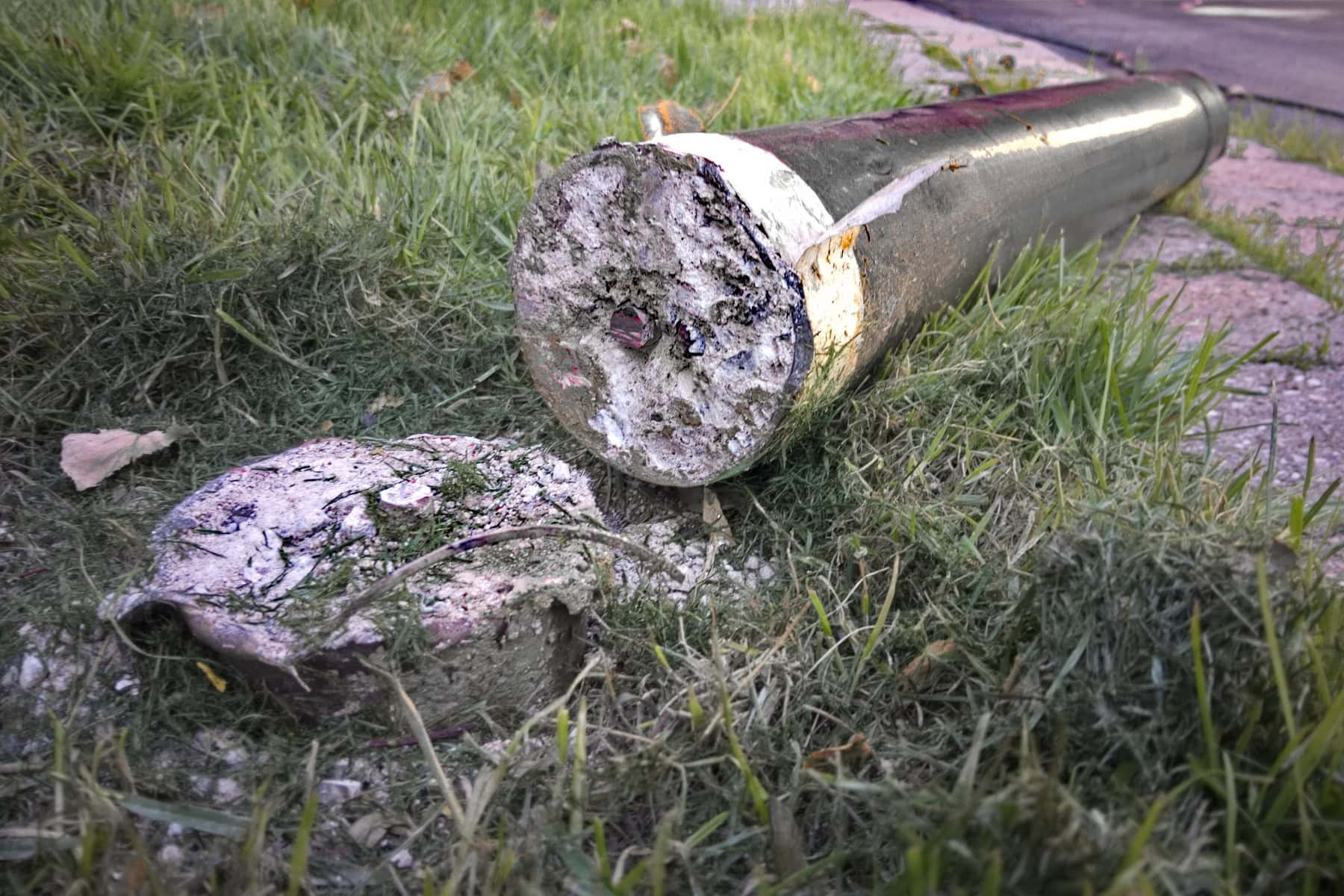

The basketball post and net stood at a weird angle – doubtless the result of numerous teenagers hanging from the hoop – sad and unused. We decided it was time to remove it, and the first part was deceptively simple. We unbolted the back-board assembly and removed it, then cut off the upper part of the post from the lower end, which was set in concrete and still at the original weird angle.
I don’t recall what the original plan was, because this was several years ago. Probably, the plan was to get the bulk removed, which was definitely a two man job, and then I’d tackle the stump. How hard could it be? I do recall vetoing suggestions involving chains and an F150 with a trailer hitch. I knew the post had been installed in the vicinity of a gas main and the initial hole was finished by hand because of that, and I had visions of the concrete surrounding the gas pipe and not letting go. Besides, pulling the gigantic plug out of the ground was sure to mess up the surrounding grass, and would weigh enough to make disposal a major problem. so there was this three foot pole buried in and filled with concrete.
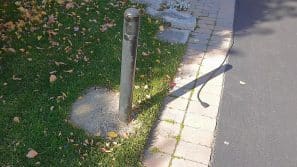
My first problem was two-fold: the concrete had been finished to match the local slope and needed to be lowered, and any cutting tools I had were not designed to cut flush to a surface, or anywhere near. So step one, which I did not then know would take several years, was to lower the level of the surrounding concrete.
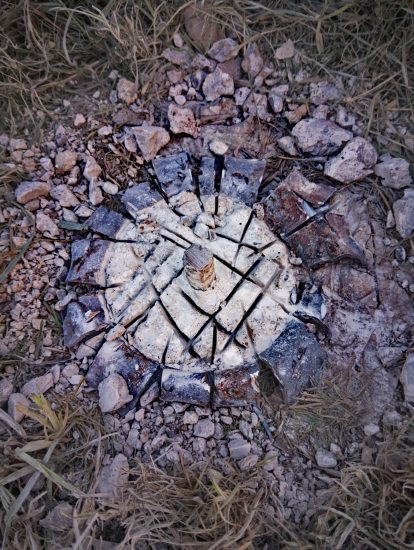
I recall thinking I’d just break it up with a sledgehammer and a stone-cutting chisel. That was quite a short lived experiment. Then I tried making parallel cuts in the surface and chipping out foot-long sections of concrete. Another short-lived effort, so I cut more grooves at right angles to the first. Now I was able to chip 1″ cubes of concrete out and everything was covered in concrete dust. I was using an angle grinder with a 4.5″ diamond blade. There was a surprising amount of concrete cubes and a surprising lack of real progress. If I remember correctly, this was November and I talked myself into believing that the remaining grooves would fill with water and the freeze-thaw cycles over winter would break up the concrete and make things easier the next spring. That didn’t happen.


What did happen was the level was lowered enough that the surrounding grass mostly covered the concrete, and the thing didn’t look that bad, even with the leaning. And the post showed me where the edge of the driveway was when there was a foot of snow covering everything. Time passed. I think I had one more round of chipping out cubes, but it was soul destroying and I began to realise why depictions of prisoners doing “hard time” showed them breaking up rocks.
From time to time my thoughts returned to the problem of my cutting tools. At one point I purchased a reciprocating saw blade with special teeth or maybe grit, but it scarcely scratched the metal. I got mentally stuck on two issues: what would happen if I used a metal cutting blade once it got through the metal and hit concrete, and the physical limitations of a 4.5″ blade on an angle grinder. If I cut at 90° to the post, it would cut deeper, but further from the concrete surface, and if I cut at an angle it could get closer to the base of the post, but not as deep, plus it would leave jagged points.
Finally, it struck me that I was thinking in two dimensions when I needed to think in three. Suppose I cut at 90°, as close to the base as I could, as deeply as the blade would reach, surely the remaining cylinder of concrete at the centre would break, especially if I used persuasion in the form of a 10lb sledge hammer applied at the top of the post stub. That would leave about an inch of stub which I would then attack vertically with my criss-cross cuts followed by hammer and chisel work. I let that idea simmer (or it might be better described as “fester”) for a year or two, while I worried about possibly having to make two parallel cuts in the metal, to make a space for a concrete blade to get to the centre, and how would I keep it straight and all the other excuses an agile mind could manufacture.
As is usual with problems I overthink, the problems were not as big as I’d let myself believe, but the post did still have one surprise to spring on me. I wrapped masking tape around the post so that the edges lined up, marking the level at which I had to cut. Then, with a metal cutting disk, I went around the post cutting a section at a time until the sparks stopped, indicating I was through the metal part. Then I switched to a masonry disk and went around again into the concrete, as deeply as I could. Now for the coup de grace, with a sledge hammer. It didn’t break, it bent. After further fruitless beating, I came to the conclusion there was a rebar at the centre – just out of reach of my metal cutting disk.
A Google search promised that a carbide tipped metal blade for a reciprocating saw would cut that, and it was right. It was almost too easy – about a minute of cutting.
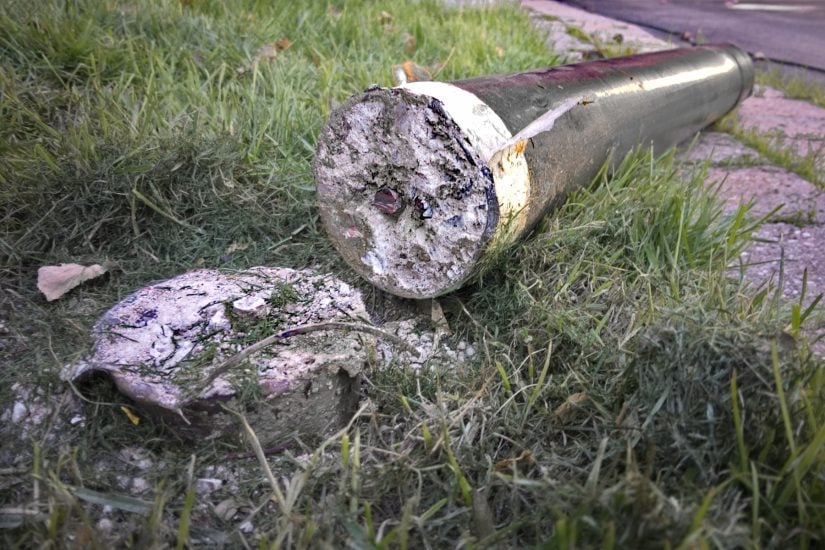
With a metal cutting disk back on the grinder, I pretended I was cutting a twelve slice pizza and quickly found out that the metal cutting blade did just fine on concrete too, so I didn’t have to keep switching disks. I did some more cuts and then chiselled out concrete chips, and bent down the tabs of metal. Having cleaned the concrete off the exposed part of the rebar, I cut it flush with the reciprocating saw, and probably could have left it there, but the neat freak took over and I cut the tabs off with vertical cuts and then ground off all the sharp bits of metal which was probably a good idea as they would not be too far underground.
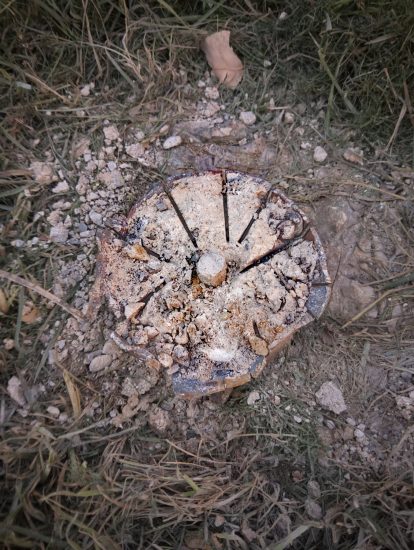
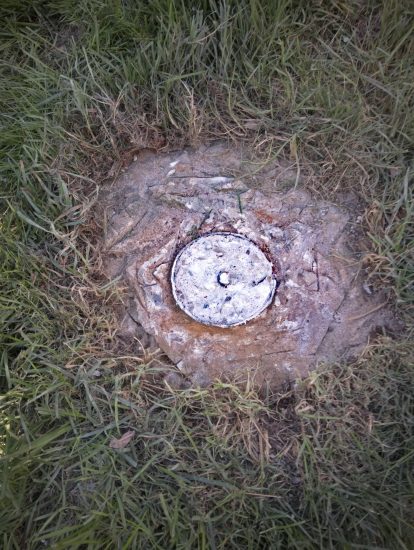
Now we just have to see how well the grass adapts to living on concrete. Judging by how well grass grows in the tiny cracks between paving stones, it should do just fine.

